Sandpaper Grit Chart
CAMI (ANSI) and FEPA P-grade sandpaper grits from coarse to fine, with particle sizes in microns and typical shop uses. Read the grit you need from the table, then open the grit picker for a material-specific recommendation.
| CAMI | FEPA | Category | CAMI µm | FEPA µm | Typical use | Stage |
|---|---|---|---|---|---|---|
| 36 | P36 | Coarse | 535 | 538 | Heavy material removal, aggressive paint and rust stripping on metal; rough shaping | Rough |
| 40 | P40 | Coarse | 428 | 425 | Rough sanding, stripping old finish, leveling uneven wood surfaces | Rough |
| 60 | P60 | Coarse | 268 | 269 | Coarse prep, removing saw marks, initial wood leveling | Rough |
| 80 | P80 | Medium | 192 | 201 | First bare-wood pass, rough leveling on surfaced lumber; paint removal final | Rough / Prep |
| 100 | P100 | Medium | 141 | 162 | General prep sanding, removing scratches from 80 grit | Prep |
| 120 | P120 | Medium | 116 | 125 | Prep sanding, smoothing between coats; general-purpose grit | Prep |
| 150 | P150 | Fine | 93 | 100 | Pre-finish sanding on bare wood; removing 120-grit scratches | Prep / Finish |
| 180 | P180 | Fine | 78 | 82 | Final pre-finish pass on bare wood before varnish or lacquer | Finish |
| 220 | P220 | Fine | 66 | 68 | Final bare-wood prep; scuff-sanding between finish coats | Finish |
| 240 | P240 | Very Fine | 53.5 | 58.5 | Between water-based finish coats; fine sanding on metal | Fine |
| 280 | P280 | Very Fine | 44 | 52.2 | Between coats; light sanding to remove dust nibs in finish | Fine |
| 320 | P320 | Very Fine | 36 | 46.2 | Coarsest grit for sanding raised grain from stain; between finish coats | Fine |
| 400 | P400 | Extra Fine | 23.6 | 35 | Finishing sanding; finest grit available in stearated paper | Fine |
| 600 | P600 | Extra Fine | 16 | 25.8 | Super-fine sanding; polishing metal surfaces, rubbing out finishes | Polish |
| 800 | P800 | Super Fine | 12.2 | 21.8 | Polishing metal; rubbing out lacquer finishes on wood | Polish |
| 1000 | P1000 | Super Fine | 9.2 | 18.3 | Rubbing out lacquer finishes; fine metal polishing | Polish |
| 1200 | P1200 | Ultra Fine | 6.5 | 15.3 | Ultra-fine polishing; mirror finishes on metal and lacquer | Polish |
| 2000 | P2000 | Ultra Fine | — | 10.3 | Final polishing; wet-sanding for mirror-smooth surfaces | Polish |
Particle sizes in microns (µm) from published coated-abrasive reference tables. CAMI µm for 2000 grit is not standardized in the source data.
How to read this chart
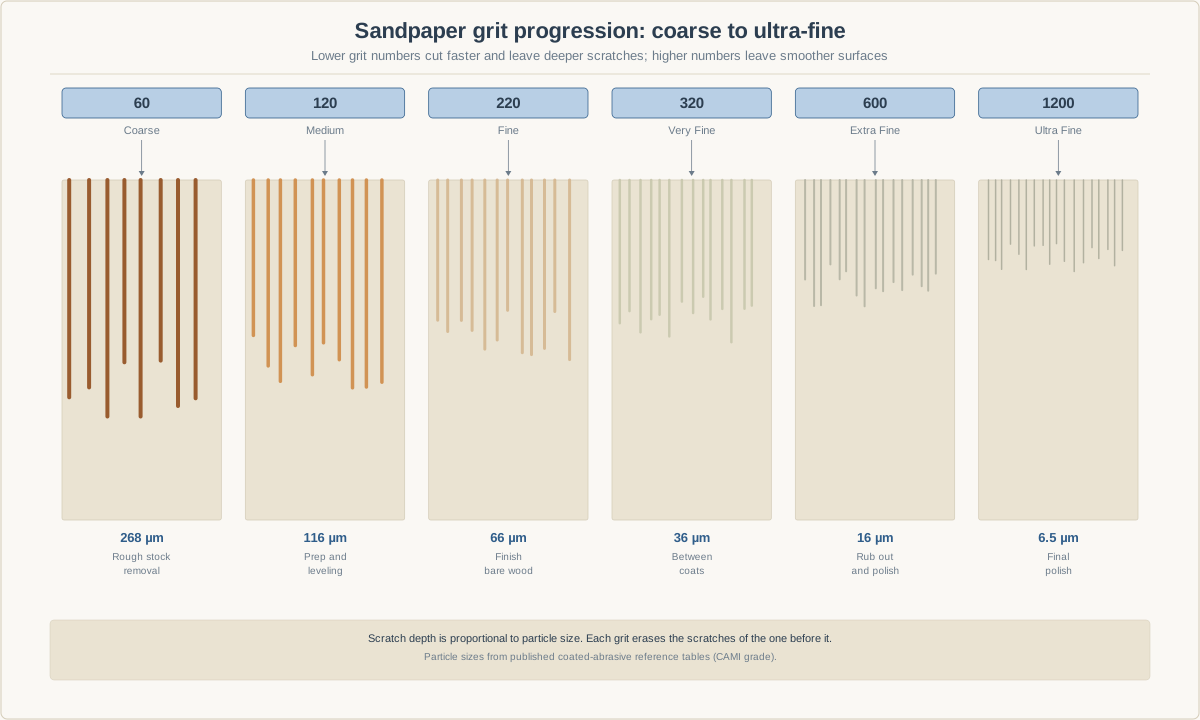
The grit number tells you how coarse or fine the abrasive particles are. Lower numbers mean larger particles that cut faster and leave deeper scratches. Higher numbers mean smaller particles that remove less material per pass but leave a smoother surface. Reading the table from top to bottom takes you from rough stock removal down to final polishing — the particle size column shows the actual diameter in microns dropping as the grit number climbs.
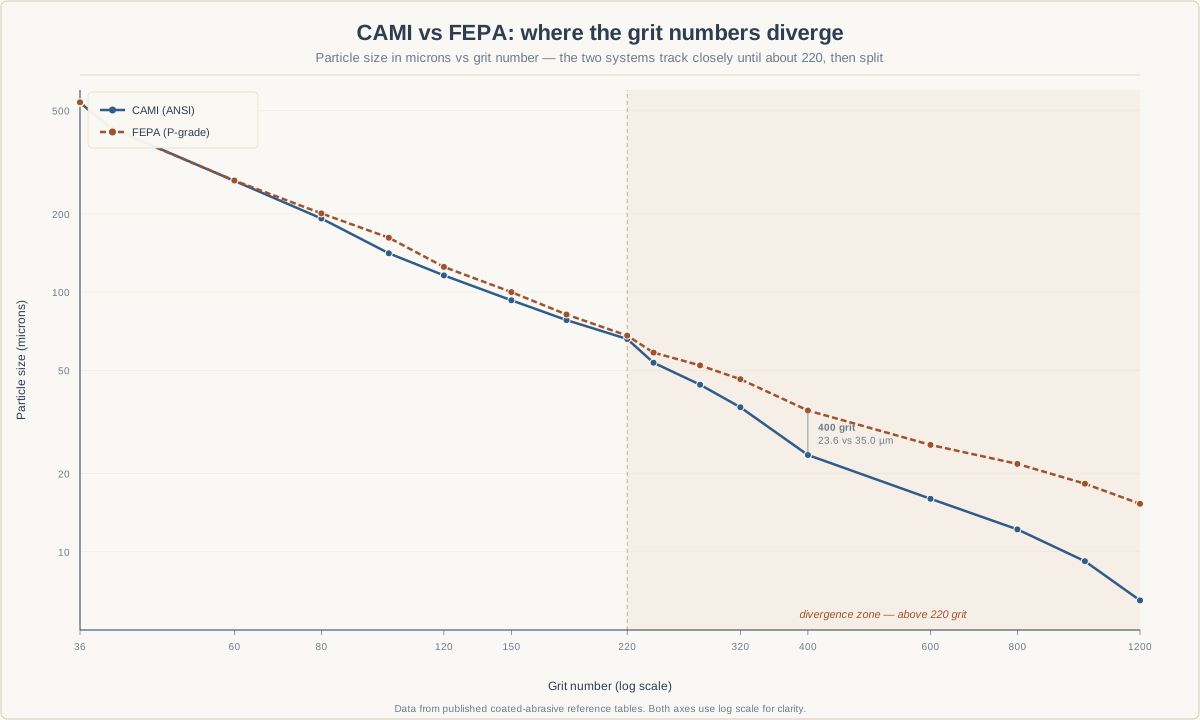
The chart lists two numbering systems side by side. CAMI — sometimes called the ANSI grade — is the system printed on most sandpaper sold in the United States. FEPA, marked with a P prefix (P80, P120), is the European and international standard. For grits up to about 220 the two systems are close enough that a CAMI 120 and a P120 perform similarly. Above 220 the same number can mean different particle sizes, so always check both columns when you read fine grits.
The category and stage columns give you a quick read on where each grit sits in a typical progression. Coarse grits (36 to 60) remove paint, rust, and rough defects. Medium grits (80 to 120) handle general prep and leveling. Fine grits (150 to 220) smooth bare wood before you apply finish. Very fine and finer grits (240 and up) are for between-coat sanding and polishing metal or cured finishes. When you need a starting grit for a specific material, use the grit picker — it narrows the ladder to your job.
- CAMI / FEPA — the grit number printed on the sheet or pack. Match the one you see.
- µm — average particle diameter in microns. Smaller means finer.
- Stage — where this grit fits in a rough-to-polish sequence.
When CAMI and FEPA numbers diverge
For grits 220 and below, CAMI and FEPA numbers track each other closely — the particle sizes differ by only a few microns, so a sheet stamped 120 and one stamped P120 will feel similar in your hand. Above 220 the two standards split. A CAMI 400 has an average particle size of about 23.6 microns, but a FEPA P400 is 35.0 microns — a meaningful difference you can see in the scratch pattern. The gap widens as you go finer: by 600 grit the FEPA particle is more than 60 percent larger than the CAMI equivalent.
The practical takeaway is simple. If you buy US-market sandpaper, the plain number on the back is your CAMI grade. If you buy European or international sheets, the P-prefixed number is your FEPA grade. The table gives you both columns so you never have to guess which system a particular sheet uses.
Pack covering 80 / 120 / 220 grit
One optional assortment covers the three grits most wood jobs use — 80 for rough leveling, 120 for prep, and 220 for finish. Confirm the grit you looked up is printed on the pack before you buy.
As an Amazon Associate we earn from qualifying purchases. Disclosure
Related pages
- Abrasives hub — all grit charts and material decisions in one place.
- What grit sandpaper for wood — scene-based grit decisions for bare wood, paint removal, and between coats.
- Grit picker tool — pick a material and stage, get a grit range and progression.
FAQ
What do the grit numbers on sandpaper actually mean?
Sandpaper grit is the number stamped on the back of the sheet, and it tells you how coarse or fine the abrasive particles are. A low number like 60 means large, aggressive particles that remove material fast and leave deep scratches. A high number like 400 means tiny particles that cut slowly and leave a smoother surface. The numbers run on a single scale from coarse to fine, so reading the chart left to right takes you from rough stock removal down to polishing.
What is the difference between CAMI and FEPA P-grade numbers?
CAMI and FEPA are two grading systems that both use numbers, but they are not the same above 220. CAMI, also called the ANSI grade, is the standard used in the United States. FEPA, marked with a P prefix, is the standard used in Europe and internationally. The numbers match closely for coarse and medium grits up to about 220, so a CAMI 120 and a P120 behave similarly. Above 220 the systems diverge, so a CAMI 400 and a P400 are different particle sizes. The chart lists both columns so you can compare the sheet in your hand against either label.
Which grit should I start with for bare wood?
For bare wood, start with a grit that removes defects without tearing the surface, then work finer. A common starting point is 80 or 100 grit to level the board and remove machine marks, followed by 120 grit to smooth the scratches from the first pass. Move to 150 or 180 grit for the final bare-wood sanding before you apply any finish. Jumping straight to a fine grit leaves the deep scratches from the coarse pass underneath, so always progress one step at a time rather than skipping stages.
When do I step up to the next finer grit?
Step to the next finer grit once the current grit has removed the scratches left by the previous one. The rule is that each grit exists to erase the scratch pattern of the grit before it, not to remove fresh material. Work each paper until the surface looks uniform and you no longer see the heavier marks from the last pass, then move up one number on the chart. Skipping two or three grits at once usually leaves visible scratches that show through the finish, so a single-step jump is the safe default.
Can I use the same grit number for wood and metal?
The grit number describes the particle size, not the material you are sanding, so the same number works on wood, metal, or paint, but the sheet type and technique differ. Coarse grits from 60 to 120 handle paint stripping and rust removal on metal as well as stock removal on wood. Fine grits from 320 up are used for rubbing out finishes and polishing metal, where bare wood rarely needs to go that fine. Use stearated or waterproof paper for metal and wet sanding, since standard paper loads up and tears quickly on hard surfaces.
Sources
Grit numbers and particle sizes follow published coated-abrasive reference standards. The two grading systems and their divergence above 220 are documented by the standards bodies below.