Hole saw size chart
Common DIY hole-saw diameters in inch fractions and exact decimal-millimeter equivalents. Pick the row that matches your job, then open the size finder to confirm arbor and material fit before cutting finished surfaces. This chart is for lookup, not a product wall — the tool takes over once you lock a label.
How to read this chart
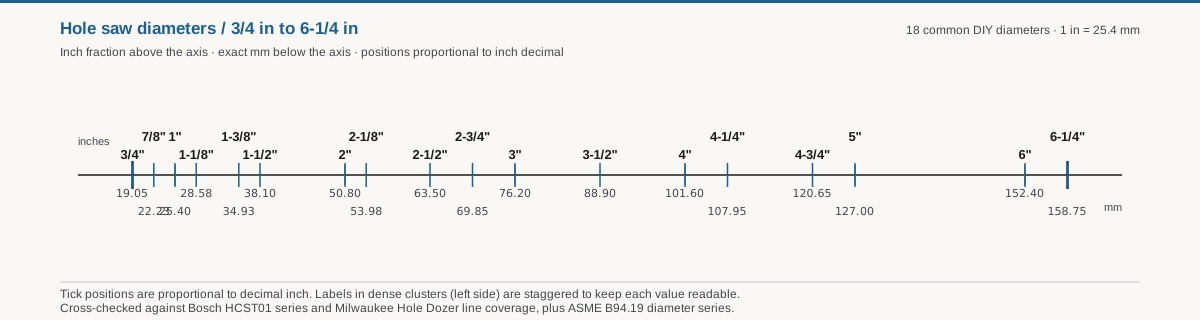
The chart lists 18 common DIY hole-saw diameters in inch fractions and exact decimal-inch and millimeter equivalents. Inch fractions match common shop labels (1", 1-3/8", 2-1/8"); millimeters are the exact inch × 25.4 conversion — 1" is 25.4 mm, not 25, and 4-1/4" is 107.95 mm, not 108. Use the chart to pick a candidate size, then confirm with the actual fixture or hardware template before you drill into a finished surface. Door-lock kits and recessed-light cans ship their own templates; the template always wins.
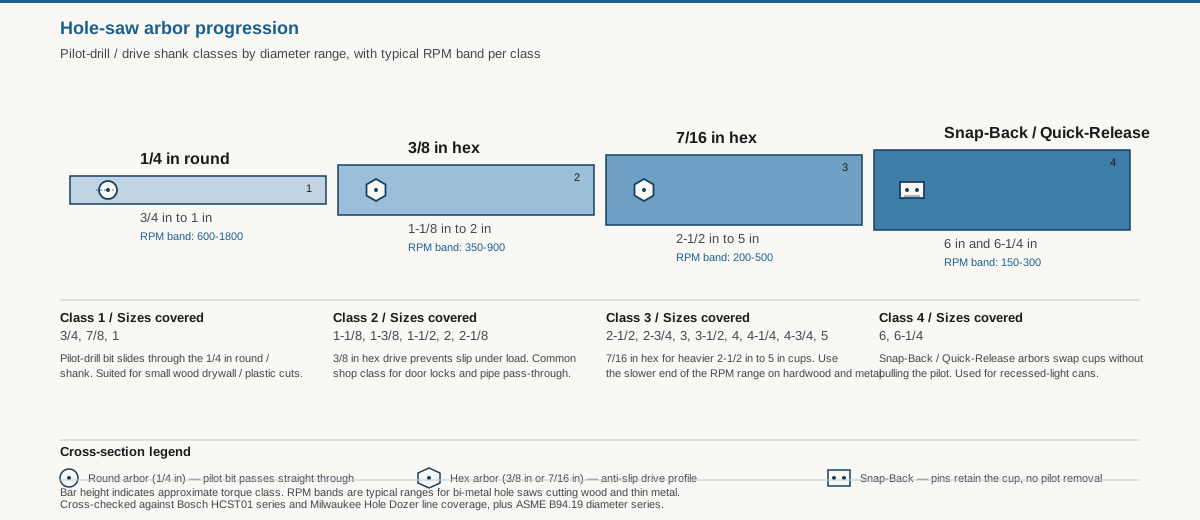
The arbor column tells you which pilot-drill / drive shank the cup needs. Small sizes (3/4" through 1") take a 1/4" round arbor. Mid sizes (1-1/8" through 2") take a 3/8" hex arbor. Larger sizes (2-1/2" through 5") take a 7/16" hex arbor. Recessed-lighting-class sizes (6" and 6-1/4") typically use a Snap-Back or Quick-Release arbor so you can swap cups without pulling the pilot every time.
The materials column lists what a standard bi-metal cup is rated to cut: wood, drywall, plastic, and thin metal (sheet steel, aluminum, copper). It is not a guarantee for stainless, masonry, or tile. For brick, concrete, or tile you need a diamond-grit masonry hole saw, slower RPM, and water-cooling on the cut. Always respect the rated RPM printed on the cup; pushing a bi-metal cup through stainless or stone just burns it out.
Hole saw sizes
Inch fractions, decimal-inch, and exact millimeter equivalents for 18 common DIY diameters. Click Find → on a row to open the size finder with that label locked.
| Diameter | Inch (dec) | mm | Arbor | Materials | Find |
|---|---|---|---|---|---|
| 3/4" | 0.750" | 19.05 | 1/4" round | wood, drywall, plastic | Find → |
| 7/8" | 0.875" | 22.23 | 1/4" round | wood, drywall, plastic, thin metal | Find → |
| 1" | 1.000" | 25.40 | 1/4" round | wood, drywall, plastic, thin metal | Find → |
| 1-1/8" | 1.125" | 28.58 | 3/8" hex | wood, drywall, plastic, metal | Find → |
| 1-3/8" | 1.375" | 34.93 | 3/8" hex | wood, drywall, plastic, metal | Find → |
| 1-1/2" | 1.500" | 38.10 | 3/8" hex | wood, drywall, plastic, metal | Find → |
| 2" | 2.000" | 50.80 | 3/8" hex | wood, drywall, plastic, metal | Find → |
| 2-1/8" | 2.125" | 53.98 | 3/8" hex | wood, plastic, metal | Find → |
| 2-1/2" | 2.500" | 63.50 | 7/16" hex | wood, plastic, metal | Find → |
| 2-3/4" | 2.750" | 69.85 | 7/16" hex | wood, metal | Find → |
| 3" | 3.000" | 76.20 | 7/16" hex | wood, plastic, metal | Find → |
| 3-1/2" | 3.500" | 88.90 | 7/16" hex | wood, plastic, metal | Find → |
| 4" | 4.000" | 101.60 | 7/16" hex | wood, plastic, metal | Find → |
| 4-1/4" | 4.250" | 107.95 | 7/16" hex | drywall, ceiling | Find → |
| 4-3/4" | 4.750" | 120.65 | 7/16" hex | wood, drywall, ceiling | Find → |
| 5" | 5.000" | 127.00 | 7/16" hex | wood, ceiling | Find → |
| 6" | 6.000" | 152.40 | Snap-Back / 7/16" hex | drywall, ceiling | Find → |
| 6-1/4" | 6.250" | 158.75 | Snap-Back / 7/16" hex | drywall, ceiling | Find → |
Common jobs by hole saw size
Eight shop jobs mapped to the diameters above. Use Find this job's size to open the finder with the job preselected.
| Job | Hole saw | Notes | Find |
|---|---|---|---|
| Door lock / deadbolt bore | 2-1/8" | Common US residential lock bore diameter — verify latch and brand kit. | Find → |
| Door latch edge bore | 1" | Common latch face bore; some kits use 7/8" or 15/16" — check template. | Find → |
| 4" recessed light cutout (approx.) | 4-1/4" | Housing-dependent; always use the fixture template. | Find → |
| 6" recessed light cutout (approx.) | 6-1/4" | Housing-dependent; always use the fixture template. | Find → |
| Kitchen sink drain / basket | 1-1/2" | Common sink opening class — verify basket flange OD. | Find → |
| 1/2" pipe / conduit pass-through (loose) | 7/8" | Rough clearance for 1/2" nominal pipe work — not a plumbing fit spec. | Find → |
| 3/4" pipe pass-through (loose) | 1-1/8" | Rough clearance for 3/4" nominal — confirm before cutting finished panels. | Find → |
| ≈5" speaker cutout class | 4-3/4" | Speaker frames vary widely — use the product template. | Find → |
Arbor progression
The arbor (pilot drill / drive shank) steps up with cup diameter. Match the cup to an arbor your drill already accepts — most consumer hole-saw kits ship two or three arbors to cover the full range. Quick-change and Snap-Back arbors cost more but save time when you run many sizes on one project.
- 1/4" round arbor — 3/4" through 1" cups.
- 3/8" hex arbor — 1-1/8" through 2" cups.
- 7/16" hex arbor — 2-1/2" through 5" cups.
- Snap-Back / Quick-Release arbor — 6" and 6-1/4" recessed-light and can-light cups.
When to leave this chart
Already know the diameter? Skip straight to the
hole saw size finder
with ?label= or ?job= set. Need to convert a number or
letter drill gauge to its inch decimal? Use the
size convert tool.
Drilling into masonry or tile needs a diamond-grit cup and the cup maker's rated
RPM — this chart only covers bi-metal cutting on wood, drywall, plastic, and thin
metal.
FAQ
What sizes do hole saws come in?
Hole saws commonly ship in inch fractions from 3/4" up to about 6-1/4". This chart covers 18 common DIY diameters: 3/4", 7/8", 1", 1-1/8", 1-3/8", 1-1/2", 2", 2-1/8", 2-1/2", 2-3/4", 3", 3-1/2", 4", 4-1/4", 4-3/4", 5", 6", and 6-1/4". Larger diameters exist for plumbing and HVAC work.
How do I convert a hole saw size to millimeters?
Millimeters on this chart are exact decimal equivalents: mm = inch × 25.4. So 1" = 25.4 mm, 1-1/2" = 38.1 mm, and 4-1/4" = 107.95 mm (not 108). The 1-inch = 25.4-millimeter definition is fixed by international standards, so the conversion is exact.
What arbor (pilot drill) does each hole saw size use?
Small hole saws (3/4" to 1") take a 1/4" round arbor. Mid sizes (1-1/8" to 2") use a 3/8" hex arbor. Larger sizes (2-1/2" up to 5") use a 7/16" hex arbor. Recessed-lighting-class sizes (6" and 6-1/4") typically use a Snap-Back or Quick-Release arbor so you can swap cups.
What is the standard hole saw size for a door lock?
A US residential door lock or deadbolt takes a 2-1/8" hole saw for the main bore, paired with a separate 1" latch edge bore. Some kits ship a 7/8" or 15/16" instead of 1" for the latch — check your lock template before you cut. The job table on this chart maps both jobs.
Can a hole saw cut metal?
Bi-metal hole saws cut thin metal — sheet steel, aluminum, copper, and most wood and drywall. They are not rated for stainless steel or masonry. For stainless or hard metal use a tungsten-grit or diamond-grit hole saw and respect the rated RPM. For brick, concrete, or tile, use a diamond-grit masonry hole saw.
What size hole saw do I need for a recessed light?
Most 4-inch recessed lights need about a 4-1/4" hole saw, and most 6-inch recessed lights need about a 6-1/4" hole saw. These are approximate — the actual cutout size is set by the fixture template, not the nominal can size. Always measure or template the fixture housing before cutting ceiling drywall.
Sources
Diameter coverage and arbor fit follow Bosch Hole Saws (HCST01, HCBxx, HSPxx lines) and Milwaukee Hole Dozer bi-metal coverage tables. Standard diameter series cross-checked against ANSI/ASME B94.19 (Hole Saws, Metal-Cutting). Materials list reflects bi-metal cup ratings only — diamond-grit or tungsten-grit cups are required for masonry, stainless, and other hard substrates. This page is a workshop reference, not a certified engineering standard — see the site disclaimer.
Related tools
- Hole saw size finder — lock a job or diameter label and read the matching arbor and material fit.
- Size convert tool — decimal-inch and millimeter cross-walk for any label.
- Router bit types chart — 18 common DIY router-bit profiles with shank size, bearing type, collet, and typical cut.
- Drill bit size chart — fractional, metric, number, and letter drill bit diameters for pilot holes.
Power-tool disclaimer: respect rated RPM, wear eye and hearing protection, and confirm the fixture template before cutting finished surfaces. See the full site disclaimer for limits of use.
As an Amazon Associate we earn from qualifying purchases. Affiliate disclosure.