Router bit types chart
Common DIY router-bit profiles grouped by what they cut, the shank they need, and whether they ride a bearing or run freehand. This chart is a profile reference, not a product wall — pick the profile that matches your cut, confirm it fits your collet, then go to the bench.
How to read this chart
The chart lists 18 common DIY router-bit profiles. The profile column names the cut — round-over, chamfer, cove, flush-trim, raised-panel, and so on. Shank tells you the cylinder that fits the router collet: 1/4" for trim routers and light work, 1/2" for mid-size and plunge routers and for any bit with a larger cutter diameter. The bearing column says whether the bit rides a guide ring (bearing) or runs freehand (no bearing). The typical-use column says the cut the bit is designed for, so you can match profile to job without guessing.
Use the chart to pick a profile that fits your router collet and your cut. Confirm the shank size on the bit package matches your collet before installing — a 1/2" shank will not seat in a 1/4" collet, and forcing the fit pulls the bit free mid-cut. Bearing bits ride a template or the workpiece edge and stay consistent as you move the router. Non-bearing bits need a fence, a straightedge, or a freehand eye for the line.
Larger cutter diameters — dado stacks, panel-raise, raised-panel bits — are almost always 1/2"-shank only, because the cutter mass and the side load exceed what a 1/4" collet can grip. Smaller profiles (straight, V-groove, core-box, beading) ship in both shanks so you can run them on a trim router. If you only own a 1/4" collet router, skip the panel-raise and Roman-ogee rows and stick to the dual-shank profiles; if you own a 1/2" router, every row on the chart is open to you with the right collet installed.
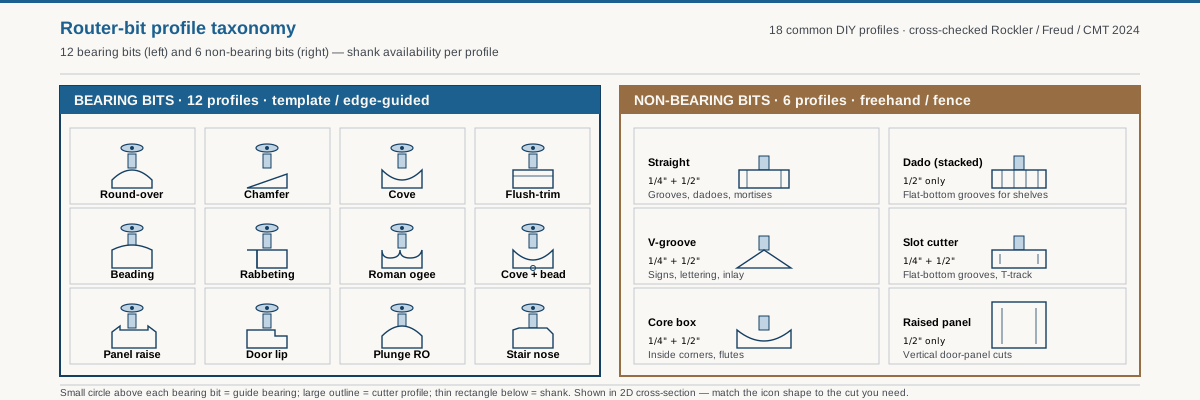
Router bit profiles
Profile, shank, bearing, and typical cut for 18 common DIY router bits. Match the profile to the job, then confirm the collet requirement before installing.
| Profile | Shank | Bearing | Collet | Typical cut / use |
|---|---|---|---|---|
| Straight | 1/4", 1/2" | No bearing | Fits 1/4" or 1/2" collet | Square-bottom grooves, dadoes, mortises, rabbets, and pattern cuts. Most fundamental bit; available in 1/4" shank for small routers and 1/2" shank for heavier cuts. |
| Round-over | 1/4", 1/2" | Bearing | Fits 1/4" or 1/2" collet | Rounds over square edges — table tops, shelves, drawer fronts. Bearing rides the workpiece edge for a consistent radius. Common radii 1/8", 3/16", 1/4", 3/8", 1/2". |
| Chamfer | 1/4", 1/2" | Bearing | Fits 1/4" or 1/2" collet | Cuts a 45° bevel on edges — picture frames, table edges, sign work. Bearing guides the cut. Angles are typically fixed at 45°; some bits offer 30°/45° combo. |
| Rabbeting (with bearing) | 1/4", 1/2" | Bearing | Fits 1/4" or 1/2" collet | Cuts a rabbet (step) along an edge for joinery — back panels, shelf edging, drawer bottoms. Bearing rides the edge; choose a smaller-diameter bearing to cut a wider rabbet on a second pass. |
| Dado (stacked set) | 1/2" | No bearing | 1/2" collet required | Cuts flat-bottom grooves for shelving and cabinet joinery. Stacked set (two outer cutters + chippers + spacers) lets you adjust width. Requires 1/2"-collet router; 1/4" routers cannot take a full stacked set. |
| Cove | 1/4", 1/2" | Bearing | Fits 1/4" or 1/2" collet | Cuts a concave (inward-curving) profile — decorative edges, table aprons, sign panels. Mirror of the round-over bit. Common radii 1/8" to 1/2". |
| Roman ogee | 1/2" | Bearing | 1/2" collet required | Decorative S-curve profile — crown molding, picture frames, raised-panel door edges. Most often a 1/2"-shank bit for the larger cutter diameter; 1/4" versions exist for trim work. |
| Flush-trim | 1/4", 1/2" | Bearing | Fits 1/4" or 1/2" collet | Trims edge banding, laminate, or veneer flush to a substrate, or trims a pattern flush to a template. Top bearing or bottom bearing depending on direction of cut. Workhorse bit for template work. |
| Cove with bead | 1/2" | Bearing | 1/2" collet required | Concave cove profile with a small bead detail — traditional cabinet and furniture edge. Combines a cove with a fillet/bead in one cutter. 1/2" shank preferred for the larger cutter diameter. |
| Panel raise | 1/2" | Bearing | 1/2" collet required | Cuts the decorative raised profile on a door panel edge — used with a panel-raising jig or router table. Large cutter diameter (1-1/2" to 3"+) so always 1/2" shank. Must run on a router table, not handheld. |
| Slot cutter | 1/4", 1/2" | No bearing | Fits 1/4" or 1/2" collet | Cuts grooves and slots of adjustable width — T-molding slots, splines, biscuit slots, inlay channels. Stacked slot cutter uses spacers to widen the cut. Some slot cutters include a small bearing for guided work. |
| V-groove | 1/4", 1/2" | No bearing | Fits 1/4" or 1/2" collet | Cuts a V-shaped groove — sign lettering, decorative grooves, fold lines for hardboard. Common included angles 60°, 90°, 120°. Use a fence or straightedge for straight grooves; freehand for carved effects. |
| Beading (half-round) | 1/4", 1/2" | Bearing | Fits 1/4" or 1/2" collet | Cuts a small half-round bead detail along an edge — drawer fronts, door edges, decorative trim. Bearing rides the edge; classic cabinetmaking profile. Pairs with a cove bit to make matched beading-and-cove moldings. |
| Core box (round-nose) | 1/4", 1/2" | No bearing | Fits 1/4" or 1/2" collet | Cuts a smooth concave bottom — fluting, inlay channels, hand-cut-look moldings. Round-nose profile leaves a rounded groove bottom rather than square. Common diameters 1/4" to 1". |
| Door lip | 1/2" | Bearing | 1/2" collet required | Cuts the decorative stepped edge on cabinet door rails and stiles — pairs with a panel-raise bit on the panel. Designed to leave the door edge profile flush with the panel raised edge. 1/2" shank; router table use. |
| Plunge round-over | 1/2" | Bearing | 1/2" collet required | Round-over profile that can plunge-cut in the middle of a panel — for stopped-round-over edges and decorative breaks in a surface. Standard round-over bits only cut starting at an edge; the plunge variant starts anywhere. |
| Stair tread (nose) | 1/2" | Bearing | 1/2" collet required | Cuts the rounded or profiled leading edge of a stair tread — slip resistance and finished look. Typically a 1/2"-shank bit; bearing rides the edge for a consistent profile. Pair with a round-over for matching profile on landing edges. |
| Raised panel (vertical) | 1/2" | No bearing | 1/2" collet required | Vertical-panel bit for raised-panel cabinet doors — cuts the field on the panel face while it sits in a panel-raising jig. Works opposite the panel-raise bit (which shapes the edge). Always 1/2" shank; router table only. |
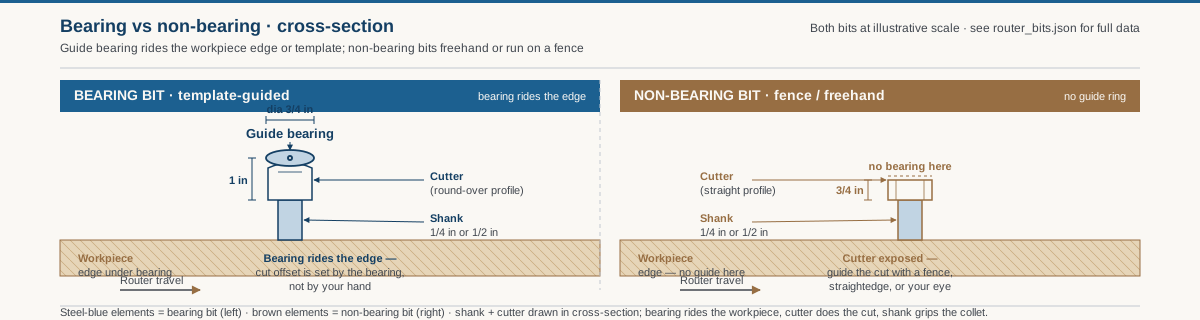
Bearing vs non-bearing
A bearing router bit has a small guide ring at the tip — usually a sealed metal wheel — that rides against the workpiece edge or a template. The cut stays consistent because the bearing, not your eye, sets the offset. Bearing bits are the right pick for round-overs, chamfers, rabbets, flush-trimming, and any profile where the line matters more than the geometry. A non-bearing bit has no guide ring; the cutter is exposed directly above the shank, and you steer the router with a fence, a straightedge, or your eye on the line. Straight bits, V-grooves, slot cutters, and core-box bits are typically non-bearing because the cut is its own reference.
When to leave this chart
Need a clean round hole instead of a profile cut? Open the hole-saw size chart for diameters from 3/4" up to 6-1/4", or the hole-saw size finder to lock a job (door lock, recessed light, pipe pass-through). For pilot and clearance holes that pre-drill for screws, the drill-bit size chart is the right reference. Convert a metric shank size to its inch decimal with the size convert tool.
FAQ
How many types of router bits are there?
There is no single canonical count because makers catalog bits differently. Practical DIY sets usually cover eight to twelve core profiles — straight, round-over, chamfer, rabbet, cove, flush-trim, V-groove, and beading — with specialty bits for raised-panel doors, dado stacks, stair nose, and Roman ogee added on demand. This chart ships 18 common DIY profiles spanning those.
What's the difference between 1/4" and 1/2" router bit shanks?
The shank is the cylinder that fits the router collet. 1/4" shanks fit light-duty routers and trim work. 1/2" shanks fit mid-size and plunge routers and are required for larger cutters — dado stacks, panel-raise, most raised-panel bits are 1/2"-only because the cutter diameter exceeds what a 1/4" collet can grip safely. Confirm bit type and shank match your collet before installing.
What is a bearing on a router bit?
A bearing is a small spinning guide ring at the tip of the bit (or on the shank). It rides against a template or the workpiece edge so the cut stays consistent as you move the router. Bearing bits (round-over, chamfer, cove, flush-trim, beading, rabbeting) are designed for guided work. Non-bearing bits (straight, V-groove, core-box, slot cutter) freehand or ride on a fence because the cut is its own reference.
What's the difference between a flush-trim bit and a straight bit?
Both cut flat-bottomed edges, for different jobs. A straight bit has no bearing and cuts freely to whatever depth and shape you guide it to — all-purpose for grooves, dadoes, mortises. A flush-trim bit has a tip bearing that rides a template or substrate, trimming edge banding, laminate, or veneer flush to that reference. If you buy one bit for trim work, the flush-trim is the higher-utility pick; if you cut joinery, start with the straight bit.
Can I use a 1/4" router bit in a 1/2" collet?
Yes — with a reducing sleeve. A 1/2"-to-1/4" sleeve drops into the 1/2" collet and grips a 1/4" shank. Most mid-size and plunge routers ship one in the case. The opposite — a 1/2" shank in a 1/4" collet — does not work; the collet cannot grip the larger shank, and the bit can spin or pull free. Confirm your router collet size before buying bits.
When is a router bit the wrong tool?
A router bit is wrong when the cut is primarily axial (along the grain only) or when you need a clean round hole. For round holes, use a hole saw or a Forstner bit. For long rip cuts, a table saw or circular saw is faster. For fine joinery on thin stock, a bearing-guided bit can grab and chip — use a backing board. Round holes and large bores are covered by the hole-saw size chart.
Sources
Profile taxonomy, shank conventions, and bearing definitions cross-checked against Rockler's "Understanding Router Bits" guide, the Freud router bit glossary, and the CMT Orange Tools router bit glossary (2024 catalogs). Profile coverage and typical-cut notes follow standard woodworking reference practice for the 18 profiles on this chart. This page is a workshop reference, not a certified engineering standard — see the site disclaimer.
Related tools
- Hole saw size chart — 18 common hole-saw diameters in inch fractions and exact mm, with arbor and material fit.
- Hole saw size finder — lock a job or diameter label and read the matching arbor and material fit.
- Size convert tool — decimal-inch and millimeter cross-walk for any label.
- Drill bit size chart — fractional, metric, number, and letter drill bit diameters for pilot holes.
Power-tool disclaimer: respect rated RPM, wear eye and hearing protection, and confirm shank and collet match before installing any bit. See the full site disclaimer for limits of use.
As an Amazon Associate we earn from qualifying purchases. Affiliate disclosure.