Tap Drill Size Chart
Match a common metric or UNC/UNF tap to the ~75% thread tap-drill label you need, plus free-fit clearance on inch rows where the source table lists it. Tables are for lookup — shopping stays on the tap drill finder once you lock a result label.
Metric tap drills
Millimeter tap-drill labels for common coarse and fine metric taps. Primary sizes follow the ~75% thread shop rule (D − P). Where Bolt Depot rounds larger, the alternate appears in the alt column — not a buy chip. Click Find → on a tap-drill label to open the finder with that bit size locked.
| Tap | Tap drill | Inch equiv | Alt |
|---|---|---|---|
| M3 × 0.5 | 2.5mm Find → | 0.0984 | — |
| M4 × 0.7 | 3.3mm Find → | 0.1299 | 3.4mm |
| M5 × 0.8 | 4.2mm Find → | 0.1654 | 4.3mm |
| M6 × 1.0 | 5.0mm Find → | 0.1969 | 5.2mm |
| M8 × 1.25 | 6.8mm Find → | 0.2677 | 6.9mm |
| M8 × 1.0 | 7.0mm Find → | 0.2756 | 7.1mm |
| M10 × 1.5 | 8.5mm Find → | 0.3346 | 8.7mm |
| M10 × 1.25 | 8.8mm Find → | 0.3465 | 8.9mm |
| M12 × 1.75 | 10.2mm Find → | 0.4016 | 10.5mm |
Inch UNC/UNF tap drills
Number, letter, and fractional tap-drill labels for common UNC and UNF threads, plus a free-fit clearance label where the source table lists one. Clearance is a pass-through size — not a structural design value. Fractional results need the inch mark in the label for clean tool lookup.
| Thread | Tap drill | Clearance | Alt |
|---|---|---|---|
| #4-40 UNC | #43 Find → | #30 Find → | — |
| #5-40 UNC | #38 Find → | #29 Find → | — |
| #6-32 UNC | #36 Find → | #25 Find → | #35 |
| #8-32 UNC | #29 Find → | #16 Find → | — |
| #10-24 UNC | #25 Find → | #7 Find → | — |
| #10-32 UNF | #21 Find → | #7 Find → | — |
| #12-24 UNC | #16 Find → | #1 Find → | — |
| 1/4-20 UNC | #7 Find → | F Find → | — |
| 1/4-28 UNF | #3 Find → | F Find → | — |
| 5/16-18 UNC | F Find → | P Find → | — |
| 5/16-24 UNF | I Find → | P Find → | — |
| 3/8-16 UNC | 5/16" Find → | W Find → | — |
| 3/8-24 UNF | Q Find → | W Find → | — |
| 7/16-14 UNC | U Find → | 29/64" Find → | — |
| 1/2-13 UNC | 27/64" Find → | 33/64" Find → | — |
Drill bit set for common tap drills
After you lock a tap-drill label above, you still need the bit. This is a consumer drill bit set (not a fastener brand kit) that includes common fractional sizes such as 5/16" used on inch UNC/UNF rows. Number, letter, and metric millimeter labels still look up on the tool; confirm the product listing if you need those gauges on the set lid.
How to read this chart
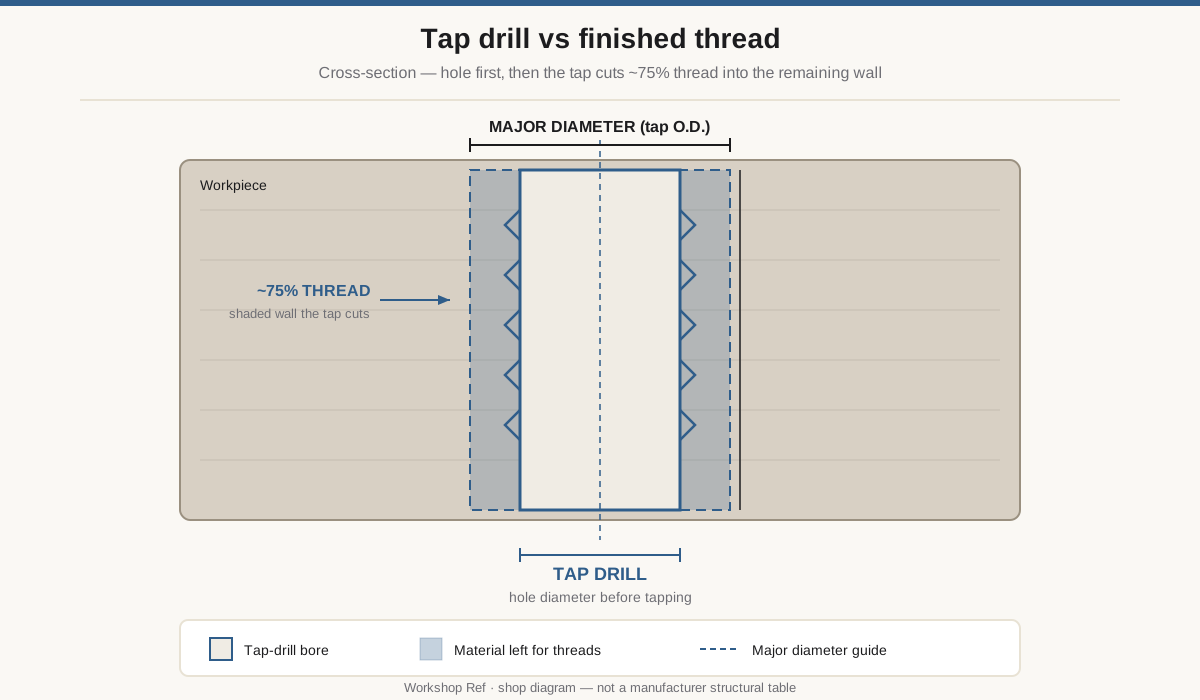
Start with the tap you already have. Metric rows give a millimeter tap-drill label aimed near 75 percent thread engagement, plus an inch-equivalent decimal for cross-checking fractional sets. When a published shop chart rounds larger than the theoretical D − P size, that larger value sits in the alt column so you can see both conventions without guessing which cell is primary. Inch rows use number gauges (#7), letter gauges (F), or fractional inch labels with the inch mark (5/16"). Read the tap-drill column first — that is the hole you drill before cutting threads. Clearance on inch rows is a separate, larger free-fit hole for through fasteners; it is not a second tap size.
Seventy-five percent thread is a common home and light-shop compromise: enough engagement for ordinary fasteners without forcing the tap in tough stock. Soft materials, thin walls, hard alloys, or coated taps may need a different percentage. If an OEM drawing or manufacturer chart specifies another drill, follow that document over this reference table. Pipe threads (NPT) and specialty forms are out of scope here.
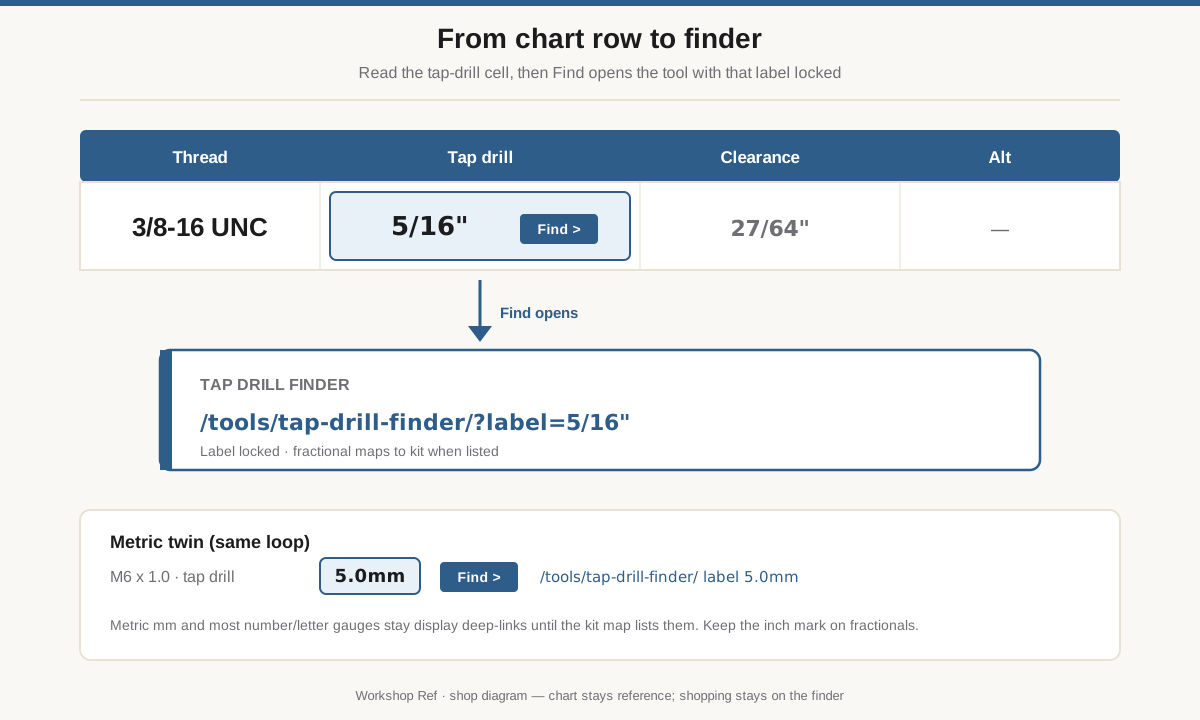
Use Find → on any tap-drill result cell, or the primary Find
your size button, to open the
tap drill finder
with ?label= set. The tool can still show a mapped set for a label. Below the
tables, one optional drill bit set covers common fractional tap drills — not a per-row buy
wall. Metric millimeters and most number or letter gauges look up as display labels;
fractional results need the inch mark so normalize and kit lookup stay honest.
- Tap drill — hole before cutting internal machine threads.
- Clearance — larger free-fit pass-through on inch rows.
- Alt — published shop round that differs from the primary 75% cell.
- Find → — deep-links the result label into the finder.
Exceptions and shop notes
Only the fractional result 5/16" (from 3/8-16 UNC) is mapped to a consumer drill set on the finder today. Metric millimeters, number gauges, letter gauges, odd fractionals such as 27/64", and clearance letters stay display deep-links — never buy chips on this page. Bare fractionals without the inch mark miss normalize and kit lookup; always keep the mark. For critical structural or production joints, treat every cell as a shop approximate and confirm on the tap or fastener manufacturer table.
FAQ
What is a tap drill size and why does the chart matter?
A tap drill is the hole you drill before cutting internal threads with a tap. Size sets how much material remains for the thread form. Most home and light-shop charts target about 75 percent thread engagement — strong enough for common fasteners without forcing the tap. This page lists common metric and UNC/UNF taps with that shop convention. Open the tap drill finder with a result label to lock the bit size.
How do I read metric versus inch tap drill rows?
Metric rows use millimeter tap-drill labels (for example 5.0mm for M6×1.0). Inch rows use number gauges, letter gauges, or fractional inch labels (for example #7 for 1/4-20, 5/16" for 3/8-16). Clearance is listed on inch rows where the source table gives a free-fit hole. Always read the tap-drill column first; clearance is a separate larger hole for through fasteners.
What does 75 percent thread mean on this chart?
Many published tables aim near 75 percent of full thread depth for general purpose work. That is a shop compromise, not a structural code. Soft materials, thin walls, or hard alloys may need a different percentage or a maker-specified drill. If a critical joint or OEM drawing specifies another size, follow that drawing over this reference chart.
How do I use this chart with the tap drill finder?
Open Find your size or click Find on a tap-drill result cell. The tap drill finder loads with that label so you can confirm the bit and, when the label is mapped in the drill kit, see one set that includes it. Metric millimeters and number or letter gauges stay display-only for kit purchase until the map lists them. Fractional results need the inch mark in the label.
How is a tap drill different from a wood-screw pilot hole?
Pilot holes usually mean wood-screw starter holes sized so threads bite without splitting the stock. Tap drills are for cutting internal machine threads after you drill the hole. The pilot-hole size chart covers wood and machine pilot or clearance paths. This tap drill chart covers thread-cutting hole sizes for common taps. Use each page for its job, then the matching finder tool.
Is this an official engineering or manufacturer chart?
No. It is a workshop reference built from published fastener and shop charts for common metric and UNC/UNF taps at about 75 percent thread. Values are approximate for DIY and light shop work, not a substitute for manufacturer structural tables, pipe-thread standards, or engineered connections. See the sources block and site disclaimer for limits of use.
Sources
Inch UNC/UNF tap drills follow Bolt Depot US 75% thread tables, cross-checked with Wikipedia List of drill and tap sizes and overlapping machine rows on the pilot-hole chart. Metric primaries follow the D − P / wiki ~75% millimeter convention so common verify asserts (M6 → 5.0mm, 1/4-20 → #7) stay consistent; Bolt Depot metric values that round larger are stored as alt. Clearance uses free-fit shop practice from the same dual-source set. Dual-sourced in site data. This page is a workshop reference, not a certified engineering standard — see the site disclaimer.
Related
- Fasteners hub — pilot, clearance, and tap entry points.
- Tap drill finder — lock a label and (when mapped) one drill set.
- Pilot hole size chart — wood pilots, clearance, and machine tap rows.
- Drill bit size chart — fractional, metric, number, and letter diameters.