What Gauge Wire for a 20-Amp Circuit?
A short decision page for a frequent shop question. The common copper association is 12 AWG under typical talk-shop conditions — not a permit drawing.
Reference only. Permanent wiring must follow local code and listings. When in doubt, hire a licensed electrician. Disclaimer
Decision table
| Question | Common copper association | Notes |
|---|---|---|
| 20A branch-style question | 12 AWG | Common residential copper association only — verify code, temperature, and install method. |
| 15A branch-style (for contrast) | 14 AWG | Often associated with 15A copper — do not put 14 AWG on a 20A breaker based on this page. |
12 AWG vs 14 AWG at a glance
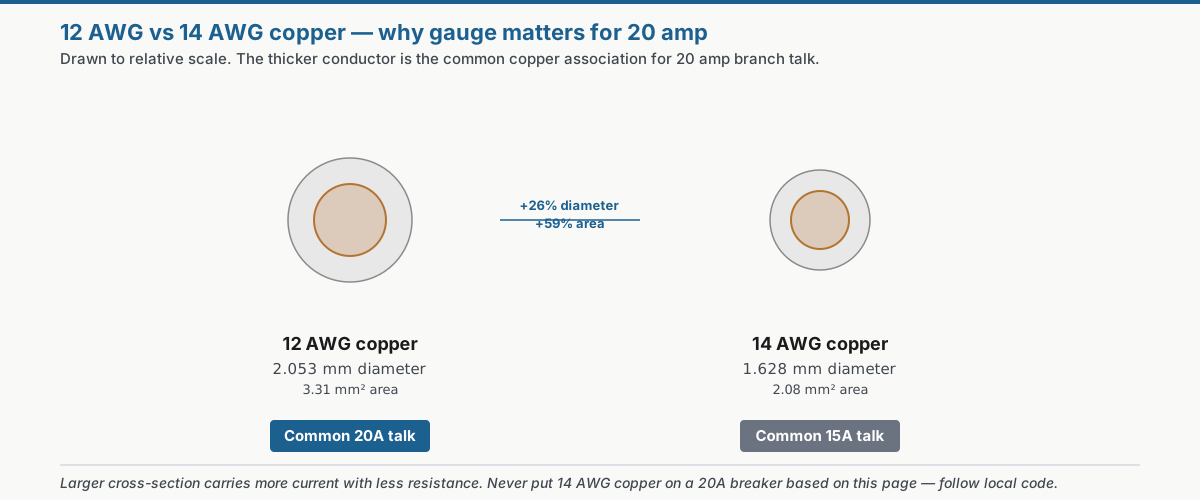
Primary for 20A talk
12 AWG
≈ 0.0808" · 2.05 mm
Often associated with 20A copper branch (conditions apply)
Not the 20A default
14 AWG
≈ 0.0641" · 1.63 mm
Often associated with 15A copper branch (conditions apply)
Boundaries
- Aluminum branch wire and multi-wire assemblies need their own tables — not this page.
- Long temporary cords: use load + length, not only “20A → 12 AWG”.
- Device, receptacle, and breaker listings can restrict conductor size independently.
Product match (restrained)
If you only need a short length of copper for a shop experiment or repair kit — not a whole-house feeder — this sample-length 12 AWG product matches the label above. Confirm AWG on the listing. We do not push whole-house cable from this page.
Wire gauge selection: how the 12 AWG call actually gets made
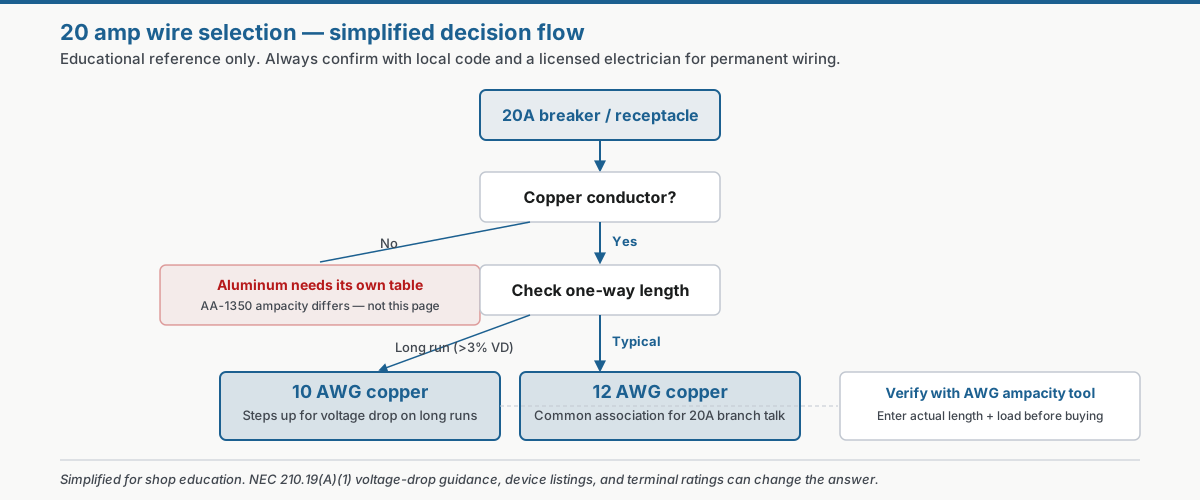
The "12 AWG for 20A" association on this page is a starting point, not a finished answer. The actual selection walks three steps in order: confirm the conductor material and insulation rating, confirm the overcurrent protection (breaker or fuse), then check the run length against voltage drop. Each step can override the previous one. The ampacity chart shows the simplified shop associations next to each AWG; the AWG ampacity tool applies your actual one-way length, material, and load before you buy.
Step one, material: copper is the default on this page. Copper-clad aluminum (CCA) and full aluminum branch wire carry current differently and have different terminations — they need their own tables, not this one. Step two, protection: the breaker, fuse, or device listing sets the upper bound. A 20A breaker on 14 AWG copper is a code violation regardless of what any web chart says. Step three, length: a 50-foot run at full 20A load can stay on 12 AWG, but a 150-foot run to a detached shop or outbuilding pushes toward 10 AWG copper to hold voltage drop near 3% (NEC 210.19 Informational Note). The AWG tool does the math for your specific distance.
- Short, copper, indoor branch — 12 AWG copper is the common association.
- Long run to detached building — usually 10 AWG copper or heavier; check with the AWG tool.
- Extension cord at the workbench — gauge depends on load and length, not just the 20A label on the breaker.
- Subpanel or feeder — out of scope for this page; use the AWG tool and consult an electrician.
Application scenarios
Most readers arrive at this page with a specific situation. Here are the four that come up most often, with the gauge call that fits each one. None of these override local code, the device listing, or a qualified electrician — they are educational shortcuts, not permit drawings.
Shop receptacle, indoor
12 AWG copper
Most 20A shop receptacles run 12 AWG copper on a short branch from the panel. The breaker, the device, and the wire all line up. Keep the run under about 50 feet to stay inside the common 3% voltage drop target.
Detached garage or outbuilding
10 AWG copper (often)
Long underground or overhead runs to a detached building drop voltage at 20A load. 10 AWG copper is the common upgrade, sometimes 8 AWG on very long runs. Run the numbers with the AWG ampacity tool before you commit to a feeder size.
Workbench extension cord
12 AWG cord, length-dependent
For a 20A-rated tool at the bench, a 12 AWG cord up to about 25 feet is the common starting point. Longer cords usually step up to 10 AWG. Use the extension cord gauge helper with the tool's actual amp draw, not the breaker size.
Subpanel feeder
Sized by load and length
Subpanel feeders are out of scope for this page. They depend on calculated load, panel rating, distance, and conductor type. A licensed electrician or the AWG tool with subpanel presets is the right starting point.
Cross-reference the four scenarios against the full ampacity chart for the simplified shop notes next to each AWG, and confirm the final call against your local electrical code. The 12 AWG default applies in the most common case — short, copper, indoor branch — and that is also the case this page's product recommendation is sized for.
FAQ
What gauge wire for a 20 amp circuit?
In common US residential copper branch talk, 20 amp is often associated with 12 AWG copper under typical conditions. That is an educational association only — temperature rating, insulation type, length, and local code can change the answer. Confirm with code and a qualified electrician for permanent wiring.
Can I use 14 AWG on a 20 amp breaker?
Do not treat this page as permission. In many US residential contexts, 14 AWG copper is associated with 15A protection, not 20A. Always follow the breaker, device listings, and code — never upsize the breaker on thinner wire based on a web chart.
Is 12 AWG always enough for 20 amp tools?
For temporary extension cords, length and load matter as much as AWG. Long runs can need a heavier cord class. Use the extension cord gauge helper for load + length, not only this branch-style note.
Is this advice a substitute for local electrical code / licensed electrician?
No. Workshop Ref publishes reference tables and finders for education only — not code-compliance verification or wiring design. Permanent branch circuits must follow local code and the work of a licensed electrician where required. Treat the 12 AWG association above as a starting question to bring to code, not an answer to skip inspection.
What about long runs — does 20 amp always stay on 12 AWG?
Not always. NEC 210.19(A)(1) Informational Note recommends keeping voltage drop at or below about 3% on a branch circuit (5% total with feeders). On a long run to a detached garage or outbuilding, voltage drop can push the next size up — commonly 10 AWG copper for that length. Use the AWG ampacity tool with your actual one-way length before buying.
Related
Wire hub · Wire gauge chart · AWG gauge chart · Ampacity chart · AWG tool · Extension cord gauge
See the site disclaimer.